Crocodile vs Alligator:
7 Key Differences
Both are ancient, armoured, and capable of killing. But they are not the same animal. The snout alone tells you which is which, and five more clues seal it.
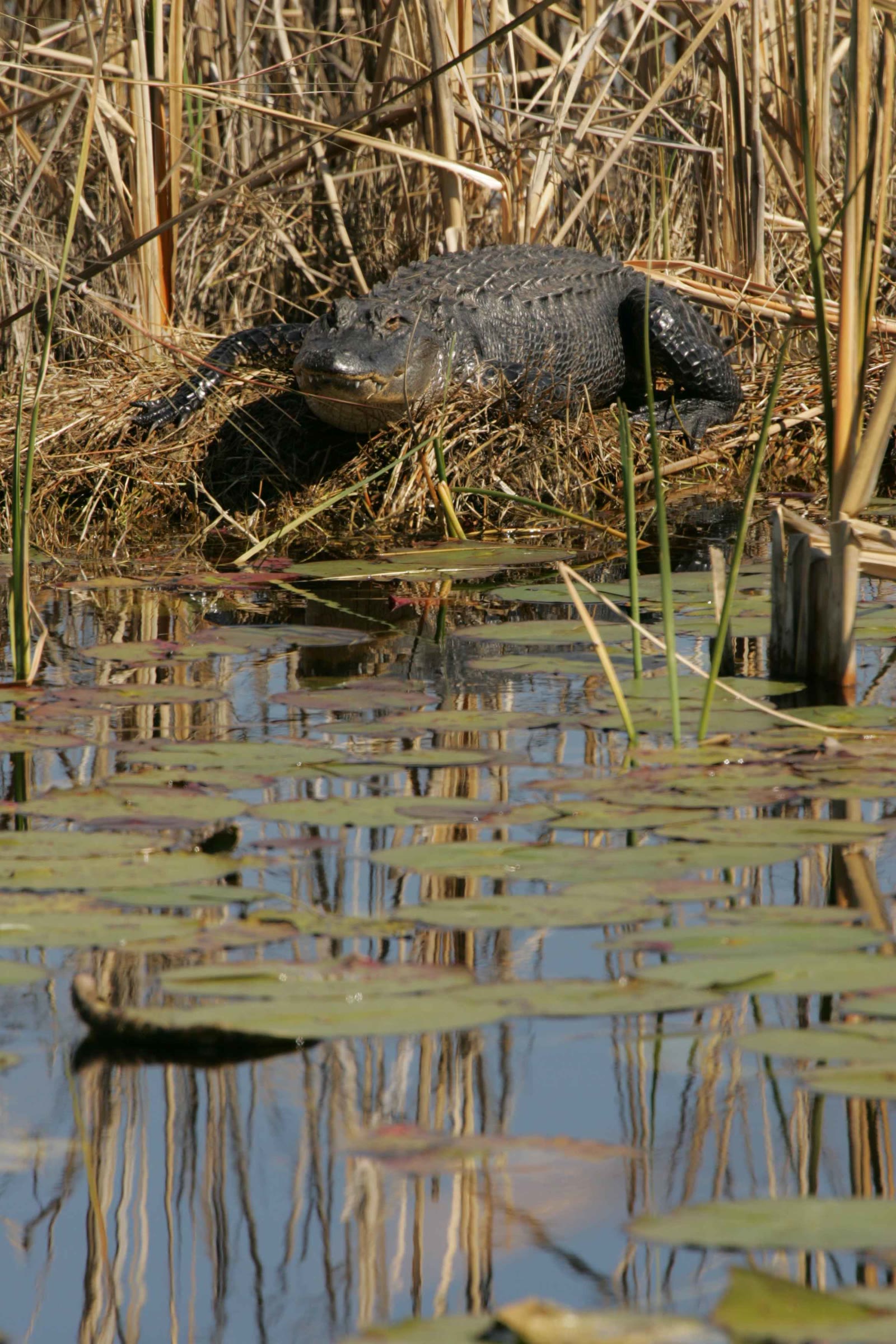
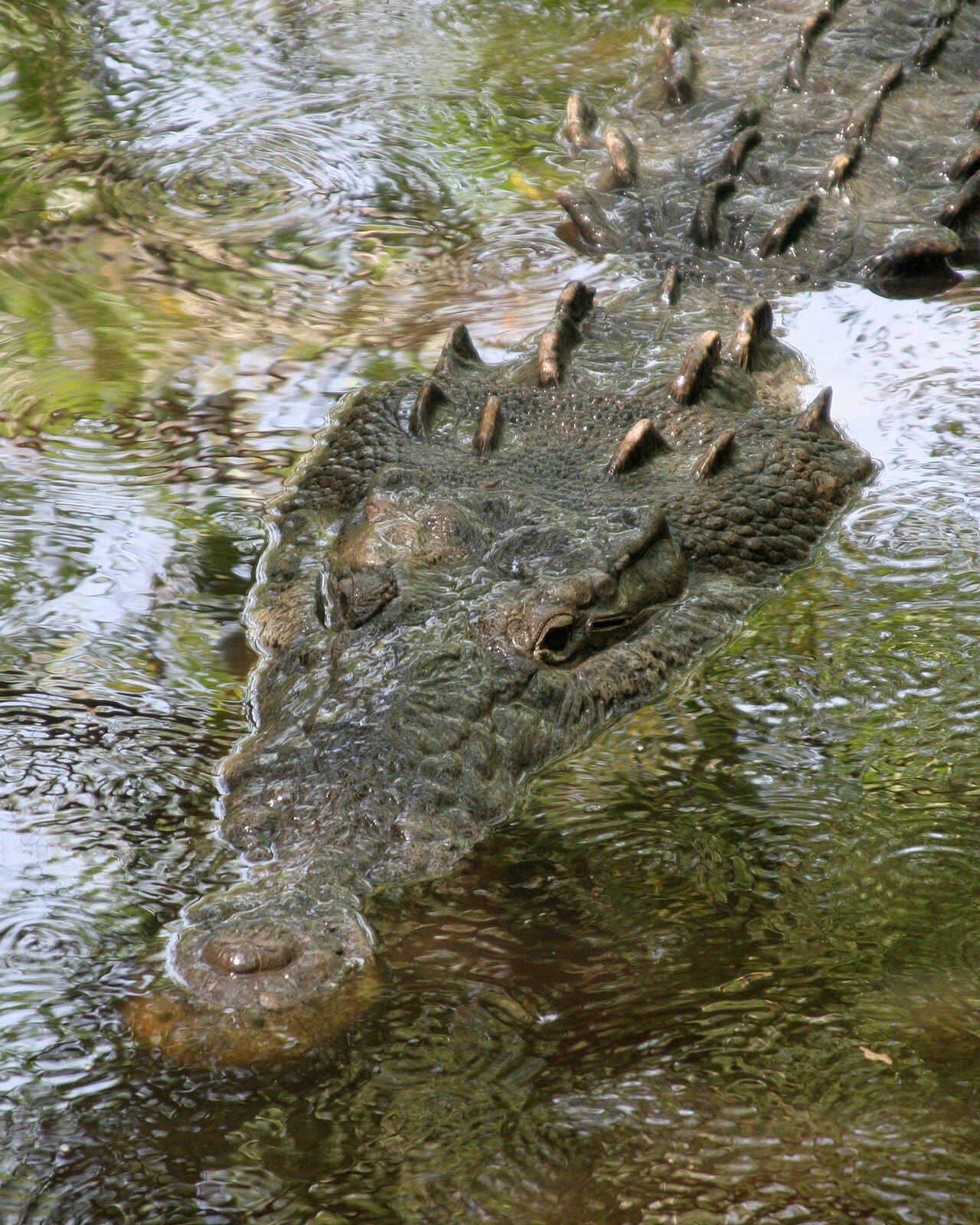
One-Second Field ID
ALLIGATOR
Broad, rounded snout (U-shape). Mouth closed: only upper teeth visible. Darker, almost black. Freshwater. Found only in USA and China.
CROCODILE
Long, narrow snout (V-shape). Mouth closed: upper and lower teeth both visible. Olive-grey. Saltwater tolerant. Found on every warm continent.
Across all crocodilians worldwide
Saltwater crocodile, Erickson 2012
US population, conservation success
All species worldwide, recorded by CrocAttack 2015-2024
7 Key Differences: Side by Side
Comparing American alligator to American crocodile, the only two species that share territory in the wild.
| Feature | Alligator | Crocodile |
|---|---|---|
| Snout shape | Broad, U-shaped | Narrow, V-shaped |
| Teeth when mouth closed | Upper teeth only visible | Both rows visible, 4th lower tooth prominent |
| Skin colour | Dark grey to black | Olive, tan, or grey-green |
| Salt tolerance | Freshwater only | Salt glands; tolerates saltwater |
| Max size (male) | 4.6 m / 450 kg | 4.6 m (American); 6+ m (Saltwater) |
| IUCN status | Least Concern (recovered) | Vulnerable (American); Least Concern (Nile) |
| Where found | SE USA, China (Chinese alligator) | Americas, Africa, Asia, Australia |
The Crocodilian Family
Crocodiles and alligators both belong to the order Crocodylia, which has 23 living species. Here are the six you are most likely to read about:
5 million strong across SE USA. Conservation comeback story. Florida and Louisiana are its heartland.
South Florida, Central America, Caribbean coast. Only croc in the USA. Prefers saltwater.
Largest living reptile. 6+ metres, 1,000 kg. IndoPacific from India to Australia. Most dangerous.
Sub-Saharan Africa. Up to 5 metres. 820 recorded human deaths across 2015-2024. Ambush predator.
South and Central America. Smaller relatives of alligators. Spectacled caiman most numerous crocodilian.
Indian subcontinent. Only ~650 remain. Long, narrow snout for fish. Cannot walk like other crocs.
Explore the Full Guide
Snout shape, teeth, scutes, skin colour, and gait. Seven tests you can run in the field.
Real bite-force measurements from Erickson et al. 2012. Saltwater croc tops 16,414 N (about 3,700 lbf).
Recorded human deaths per species, 2015-2024, counted from the CrocAttack database, with the reporting gaps named.
Louisiana swamp tours, Florida Everglades, Gatorland Orlando. Booking links.
Florida Bay, African safari, Darwin Harbour, Kakadu. GetYourGuide tours.
Crocs live in saltwater, gators in fresh (false). Crocs are faster on land (varies). Seven myths corrected.
Frequently Asked Questions
What is the main difference between a crocodile and an alligator?
The clearest visual difference is the snout shape. Alligators have a broad, rounded U-shaped snout. Crocodiles have a longer, narrower V-shaped snout. When an alligator closes its mouth, only the upper teeth are visible. When a crocodile closes its mouth, both upper and lower teeth interlock and remain visible, including a prominent fourth lower tooth on each side.
Are crocodiles more dangerous than alligators?
In terms of human deaths, yes, by a wide margin. The CrocAttack database recorded 1,243 fatal saltwater crocodile attacks and 820 fatal Nile crocodile attacks across 2015 to 2024, against 16 fatal American alligator attacks in the United States over the same decade, despite a US alligator population of roughly 5 million. Both are capable predators, but crocodile populations in Africa, South Asia and the Indo-Pacific share water with communities that depend on it for fishing, washing and drinking, which is where most fatal encounters happen.
Can crocodiles and alligators live in the same place?
Yes, but only in a small area of southern Florida. The Everglades and Florida Bay are the only places on Earth where wild American alligators (Alligator mississippiensis) and American crocodiles (Crocodylus acutus) coexist. Alligators dominate the freshwater marshes inland, while American crocodiles prefer coastal saltwater and brackish habitats.
Which is bigger, a crocodile or an alligator?
It depends on the species. American alligators are large, with males reaching up to 4.6 metres (15 feet) and 450 kg (1,000 lbs). Saltwater crocodiles are the largest living reptile and can exceed 6 metres (20 feet) and 1,000 kg (2,200 lbs). Nile crocodiles regularly reach 5 metres. American crocodiles are similar in size to American alligators at up to 4.6 metres. The Chinese alligator is the smallest, rarely exceeding 2 metres.
Which has a stronger bite, a crocodile or an alligator?
Saltwater crocodiles have the strongest measured bite of any living animal at 16,414 newtons (about 3,700 lbf), recorded by Erickson et al. in a 2012 PLOS ONE study. The largest American alligator in the same study measured 9,452 newtons (2,125 lbf), the second-highest of any crocodilian tested. Bite force scales with body size, so each figure reflects the largest individual sampled. All large crocodilians out-bite any mammal.
Are alligators related to crocodiles?
Yes, they are related but not as closely as the similar appearance suggests. Both belong to the order Crocodylia, which also includes gharials and caimans. Alligators and caimans form the family Alligatoridae. True crocodiles belong to the family Crocodylidae. The two families diverged approximately 80 million years ago during the late Cretaceous period.